
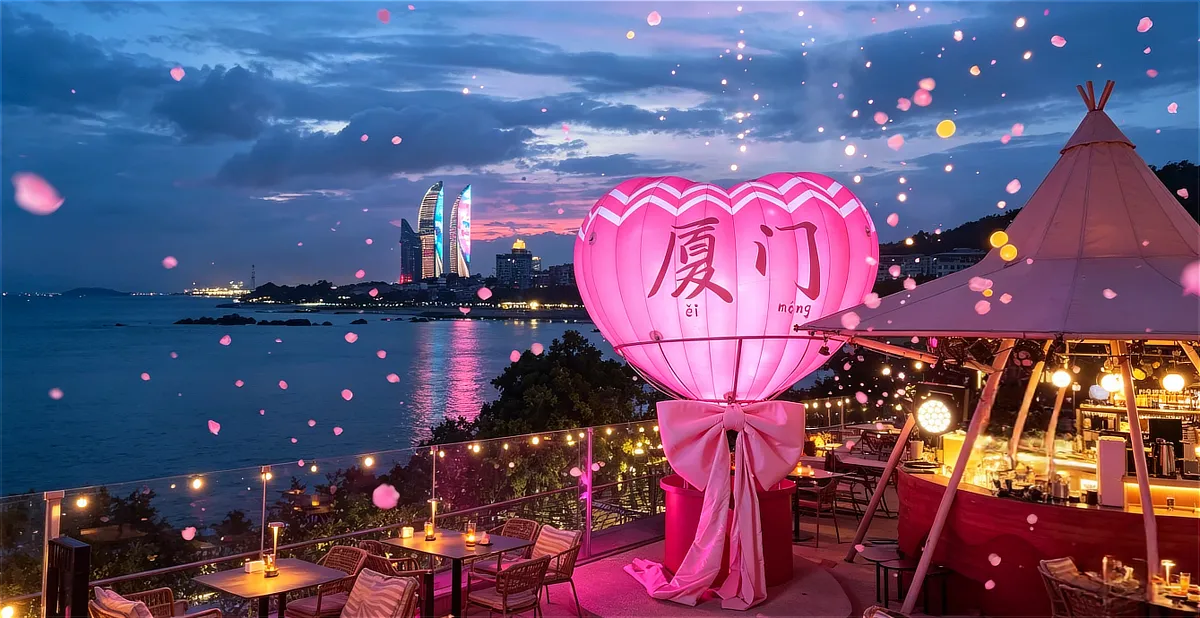
I’d never heard of Xiamen when I flew to China in February 2025 to meet up with a friend. I had no idea what Xiamen was famous for, and my expectations were low. Two weeks later I’d fallen for it, and I later spent April to June there too.
What Is Xiamen Famous For? The Short Answer
Xiamen (厦门), also known as Amoy, is famous for Gulangyu Island, a car-free island full of colonial-era mansions. It’s also known for fresh seafood and Southern Fujian cuisine, sunset beaches, traditional temples, and a laid-back, livable feel that’s rare in big Chinese cities.
Below are the six things Xiamen is best known for, what makes it feel different from other Chinese cities, and when to go.
Xiamen at a glance
- Where: Fujian Province, on China’s southeast coast
- Also known as: Amoy
- Best time to visit: October to December and March to May
- Time needed: 3 to 4 days for the highlights
- Getting around: Metro, buses, and ride-hailing apps like DiDi
- Airport: XMN. Gaoqi International is set to close in late December 2026, and the new Xiang’an International Airport takes over the XMN code when it opens.
How Xiamen Won Me Over
Xiamen isn’t a popular stop for foreign travelers, and I think they’re missing out on this hidden gem. It’s one of those cities that sneaks up on you.
Picture a car-free island full of old colonial mansions, a street market serving crispy oyster omelets, and a coastline where you can spot Taiwan-administered Kinmen (金门) on a clear day. That’s Xiamen, on the coast of Fujian Province.
It’s the kind of place people plan for a long weekend and end up wishing they’d booked a full week. By the time I left, I understood why.
The 6 Things Xiamen Is Famous For
These are the six things that stuck with me most.
1. Gulangyu Island: Colonial Mansions and Zero Cars
Gulangyu Island (鼓浪屿) is the first place most people name when they ask what Xiamen is famous for, and it earns the spot. It’s a UNESCO World Heritage Site, listed in 2017, packed with colonial-era mansions left over from its days as an international settlement.
Walking its lanes feels like stepping into a different era, with an artsy streak that runs from the prettiest corner to the piano museum.

One of my favorite things about Gulangyu Island was walking along its coastline, with the sound of the waves on one side and charming colonial buildings on the other. I found the whole experience incredibly refreshing and calming. With the sea breeze in the air and the island’s unhurried pace, I felt myself slowing down, taking in my surroundings, and simply enjoying the moment instead of rushing from one attraction to the next.
That unhurried feel is the best part. No cars or motorbikes are allowed, so I could wander down whatever lane caught my eye. In the city, I always felt like I had to match the pace around me. Here, I set my own. Give it five minutes and the island’s slow rhythm rubs off on you.
2. Beaches and Sunsets
Xiamen doesn’t do coastline halfheartedly.
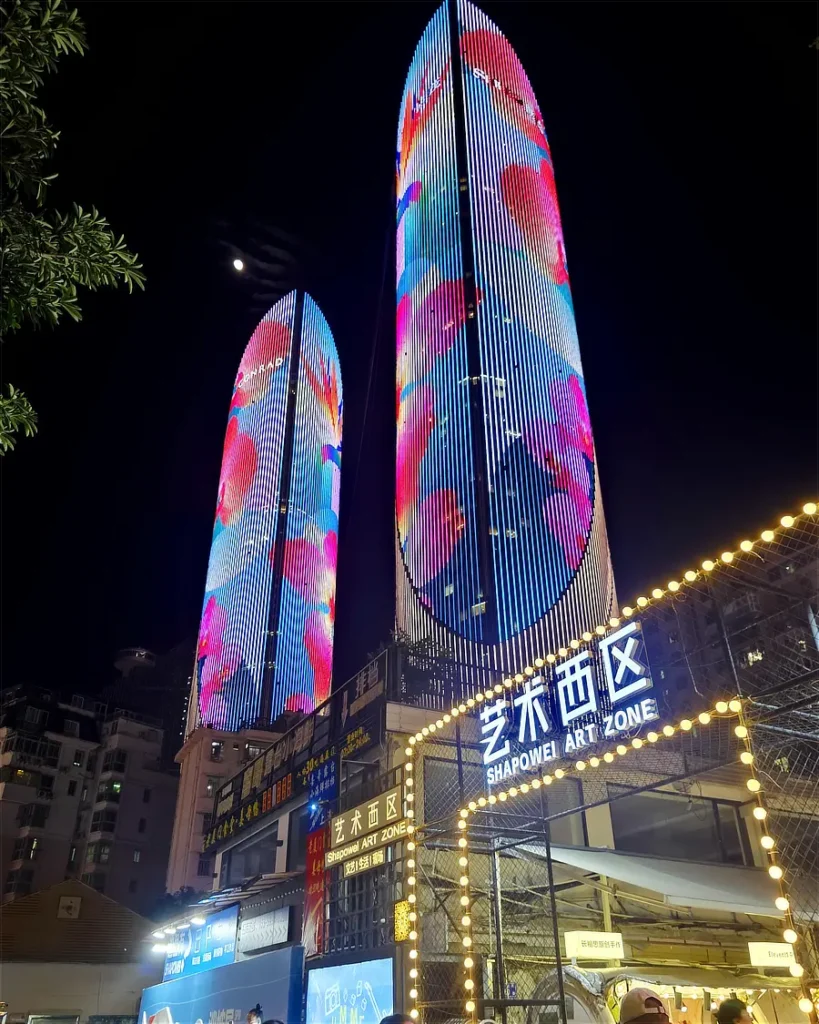
Watching the sun sink behind Xiamen’s Twin Towers (more on those below) from Baicheng Beach (白城沙滩) is one of the most romantic things I’ve ever seen. I often saw couples gather on the sand just for this moment, and open-air live music venues along the shore turn it into a full evening. Grab a cocktail, listen to the music, and watch the sky change colors with someone you love.
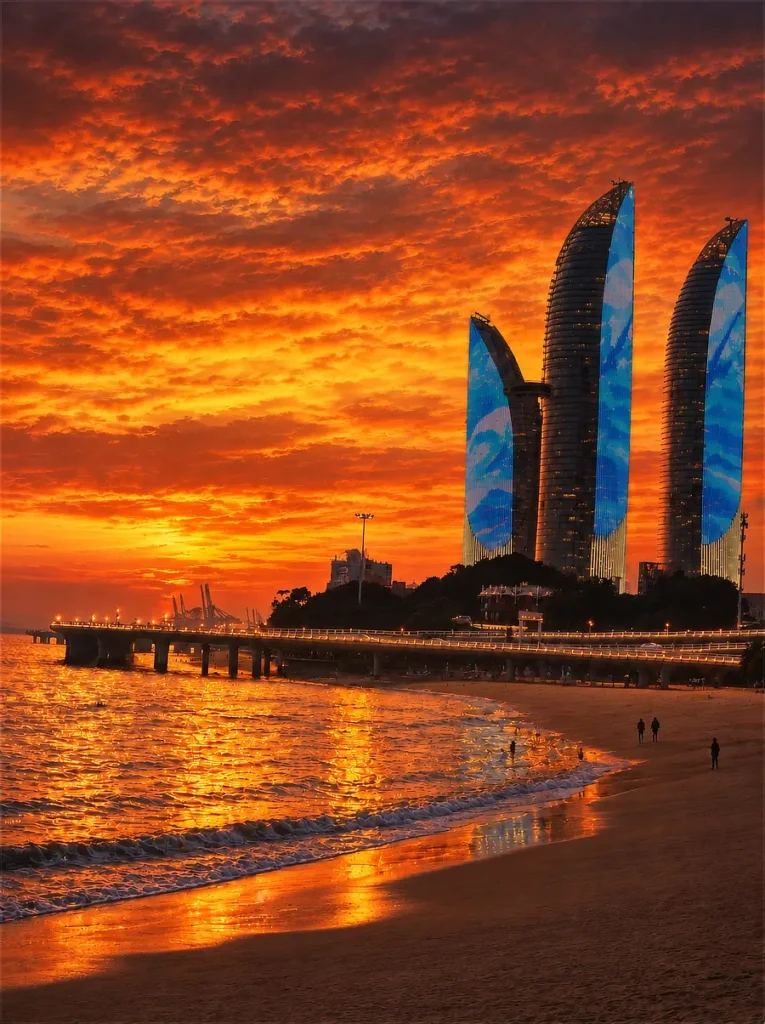
Walk a little further and Pearl Bay (珍珠湾) opens up against a backdrop of green hills. This is the kind of view that makes you stop mid-step.
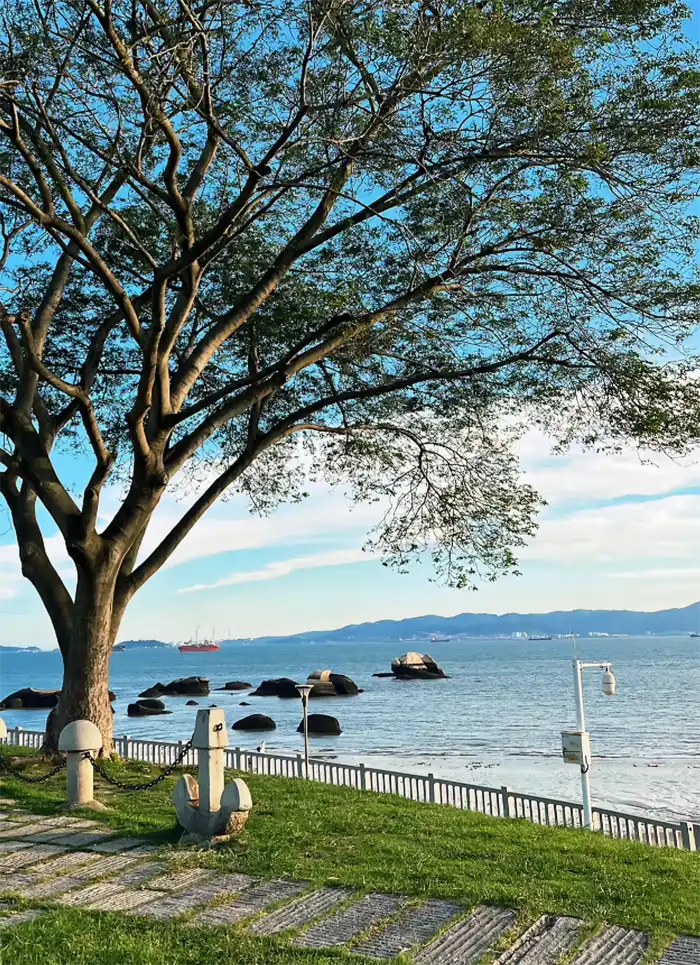
I would say one of the best ways to enjoy the coast is to rent a bike and ride along Huandao Road (环岛路), the seaside ring road, with the sea on one side and the bustling city on the other.
3. Street Food Culture
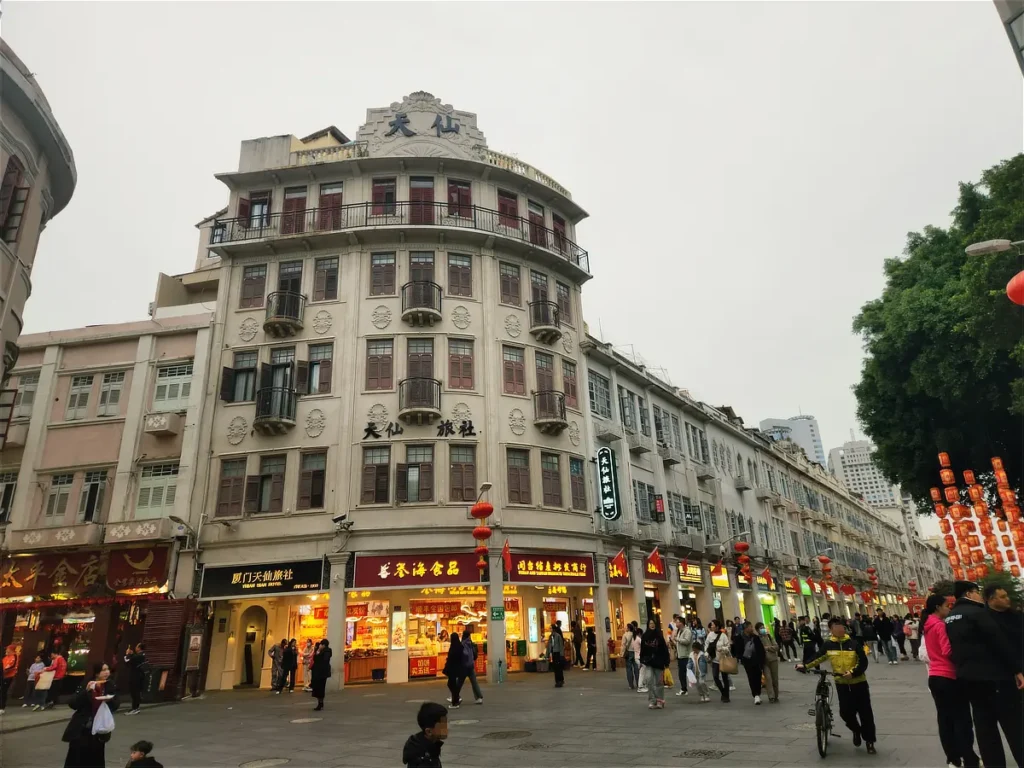
Hungry? Follow your nose to Zhongshan Road (中山路步行街), the old pedestrian street, and Bashi (八市), the city’s biggest and oldest traditional market, famous for fresh seafood. You’ll be surrounded by all kinds of delicious foods, and it’s easy to see why people plan whole trips around eating here.

Start with the signature dish, the oyster omelet (海蛎煎), crispy at the edges and packed with plump little oysters. I tried mine at Bashi for ¥20 (about $3), and let me tell you, I learned the hard way that this is one snack you don’t want to save for later! The first time, I got mine to go and ate it a while later, by which point the omelet had turned soggy. The next time, I dug in right after buying it, and the difference was night and day. That crispy texture and savory flavor were exactly what I’d been missing the first time around. Trust me, eat it while it’s hot!
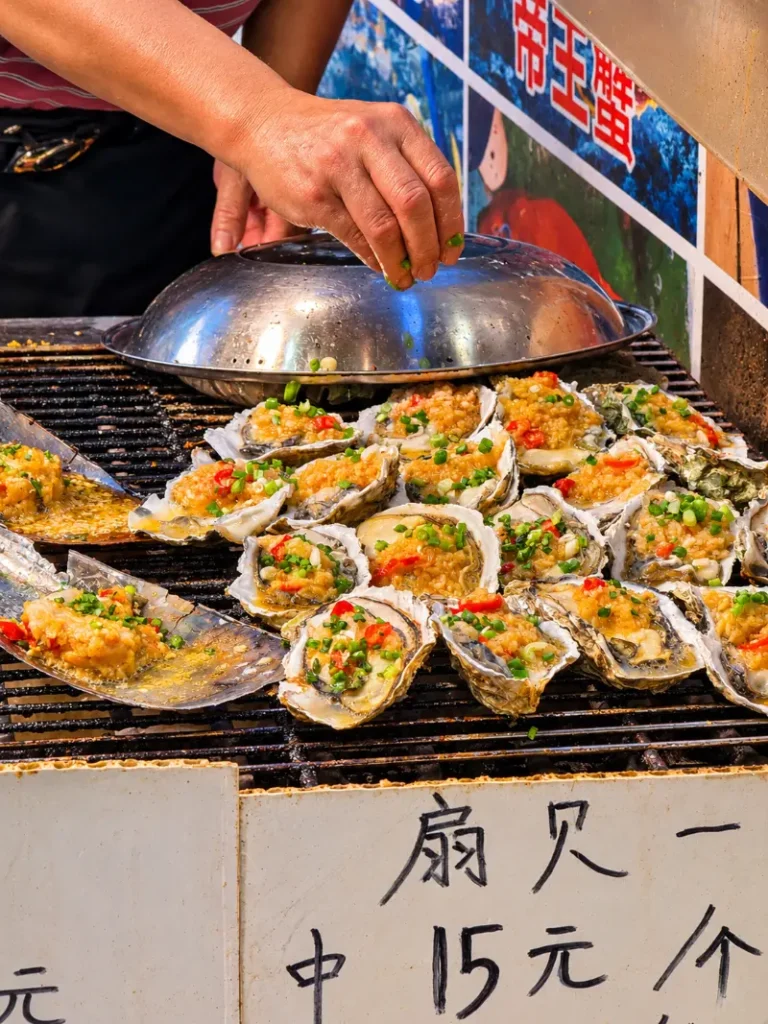
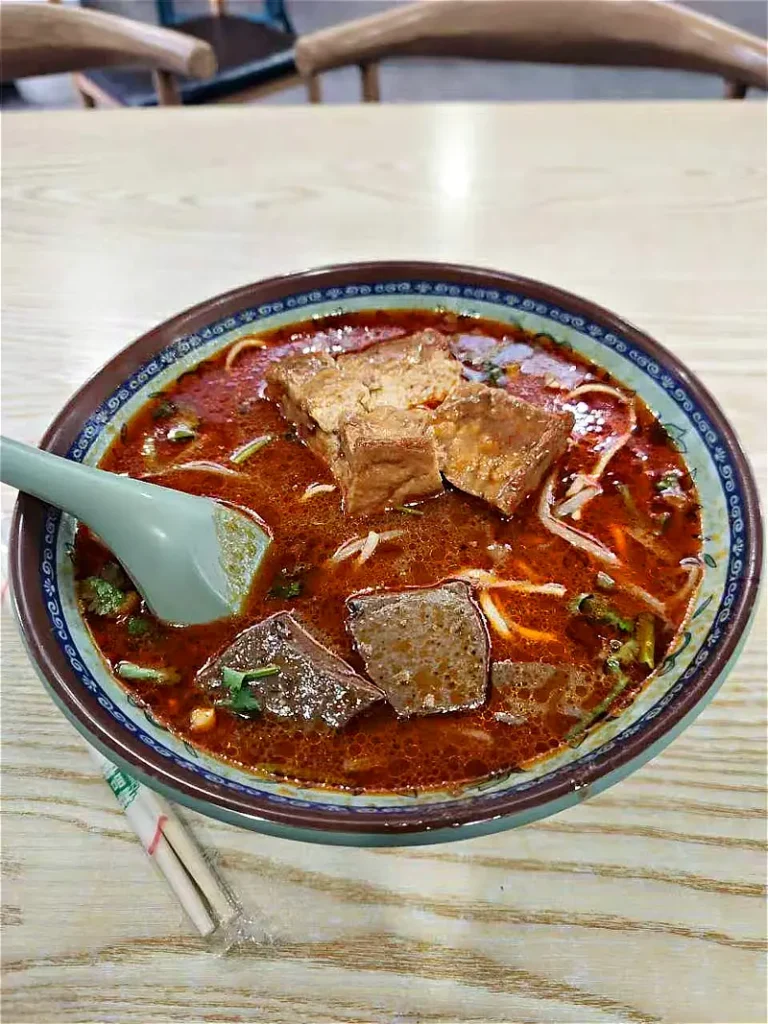
Next up, try a bowl of sha cha noodles (沙茶面). The rich, savory broth has a slightly peanutty flavor I hadn’t tasted anywhere else, making it a delicious way to continue exploring Xiamen’s local food scene.
There’s also Zengcuo’an (曾厝垵), on Huandao Road near Xiamen University. It used to be a popular spot, but in my experience it has slipped. I paid ¥20 for 8 small squid sticks and regretted it, since they were bland and pricey. I’d rather get the same foods at Bashi or even better, at Shi Gu Road (石鼓路) in Jimei (集美) area. It’s still worth a quick walk if you’re nearby.
Food booths are everywhere, so say yes to whatever catches you eye. Food like this will have you adding another day to your trip.
4. Temples and Cultural Sites
Right next to Xiamen University sits Nanputuo Temple (南普陀寺), a Buddhist temple where people come to pray and visitors come to admire the buildings.
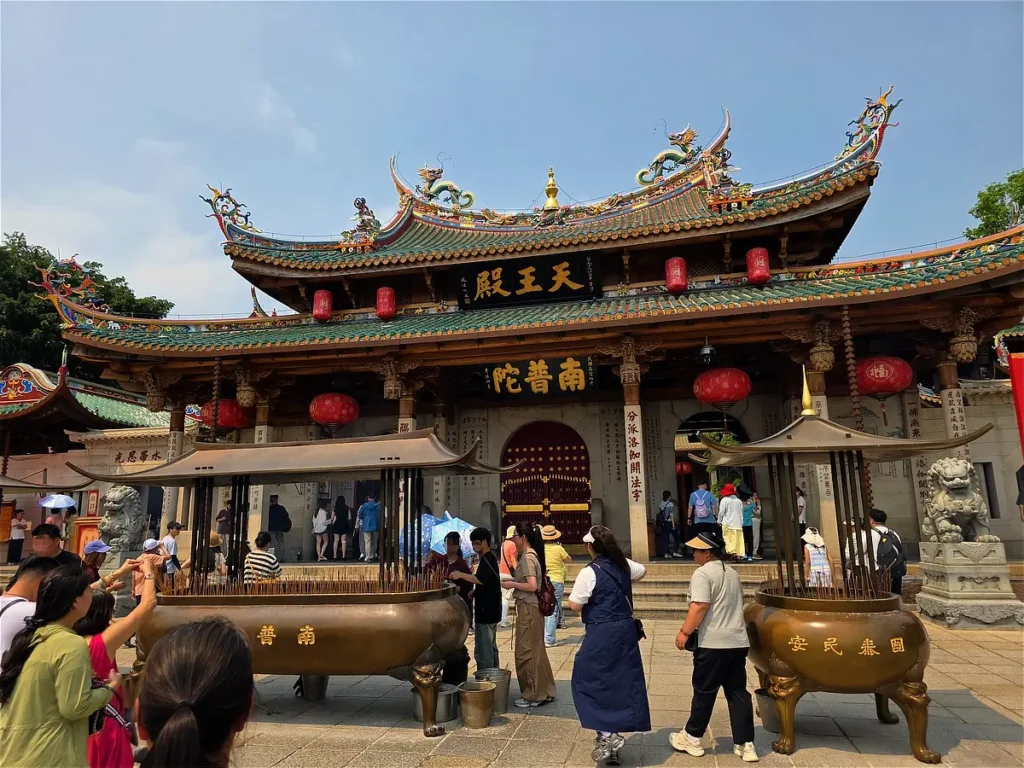
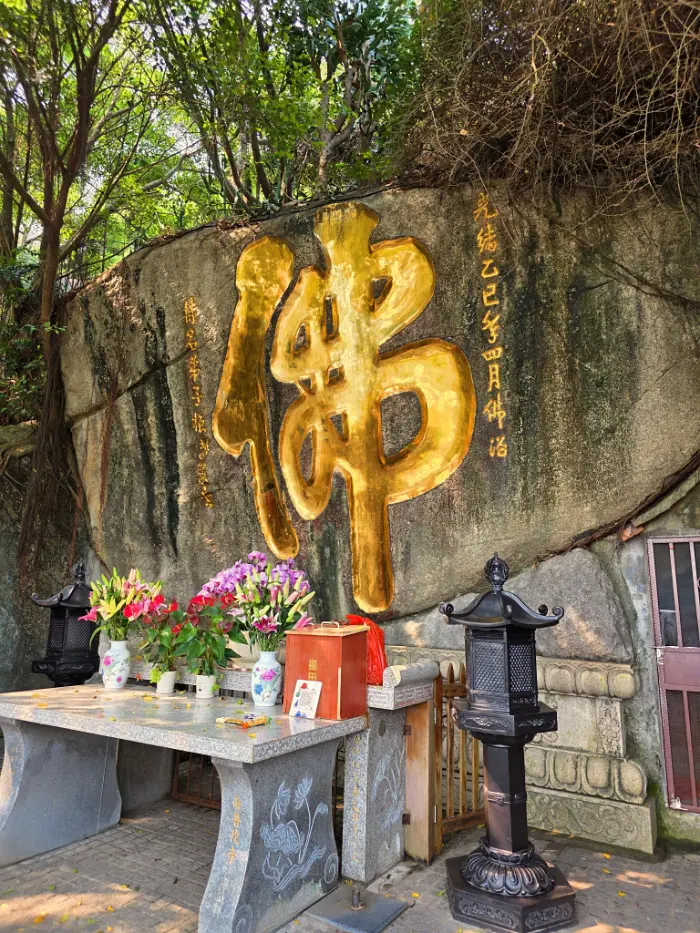
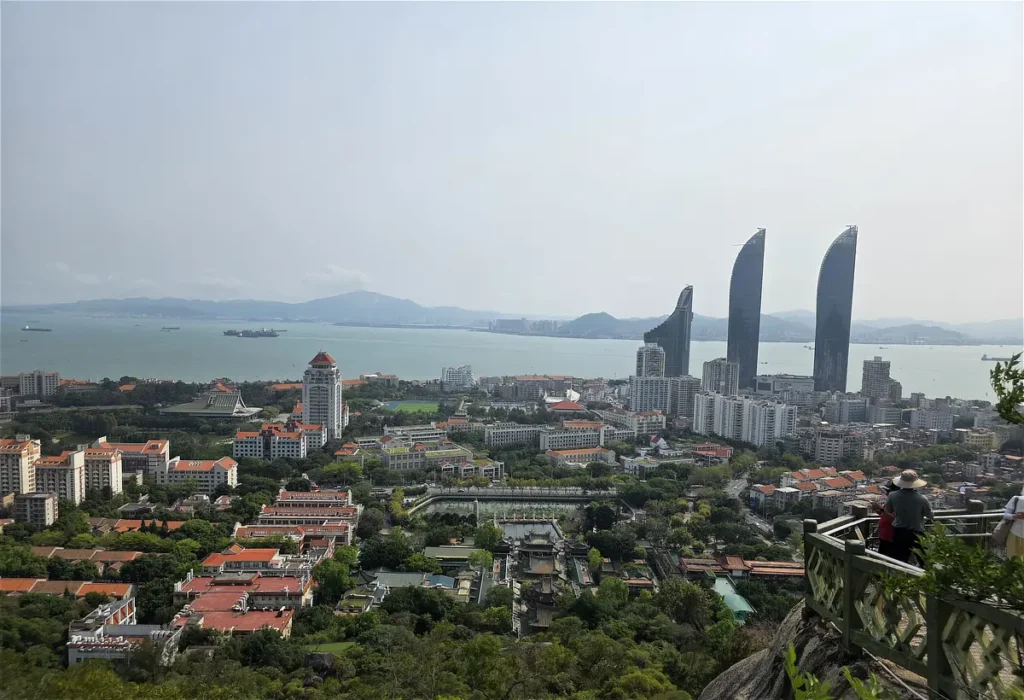
Head toward the back and you’ll pass Buddhist shrines, Mazu temples, and even old churches. Behind the temple rises Wulaofeng mountain (五老峰), and you can hike up if you’re up for it. Fair warning: it’s a real workout, so don’t schedule anything tight afterward if you do decide to go up. The payoff is a view of the ocean and the city from the top.
Have an extra day? The Hakka tulou (客家土楼), huge round earthen fortresses a few hours inland, are a UNESCO World Heritage Site and a popular day trip from Xiamen. These fortresses are built by the Hakka people for big clan families to live together and defend themselves in the mountains.
5. A Modern City That’s Easy to Get Around
Xiamen’s skyline tells its own story. The Twin Towers, officially Shimao Cross-Strait Plaza (世茂海峡大厦), rise to about 300 meters in sail-shaped silhouettes, with an observation deck that looks straight out toward Kinmen.
The part that surprised me more was the buses. Xiamen’s BRT (bus rapid transit) runs on its own elevated roadways and bridge lanes, and since it opened in 2008 it has been considered China’s first elevated BRT network. Buses skip the traffic entirely!
Add a modern metro and traffic stays manageable in a city of millions. Xiamen was one of China’s first Special Economic Zones, but compared with other Chinese cities I’ve visited, its streets felt noticeably cleaner and greener, and it never felt like one giant construction site.
6. Hikes, Trails, and Sunset Causeway
In most cities, getting outside takes planning. In Xiamen, it takes about five minutes.
Walk a stretch of the Mountains-to-Sea Trail (what locals call the mountain-sea health path, 山海健康步道), and one minute you’re between office towers, the next you turn a corner and the whole ocean opens up in front of you.
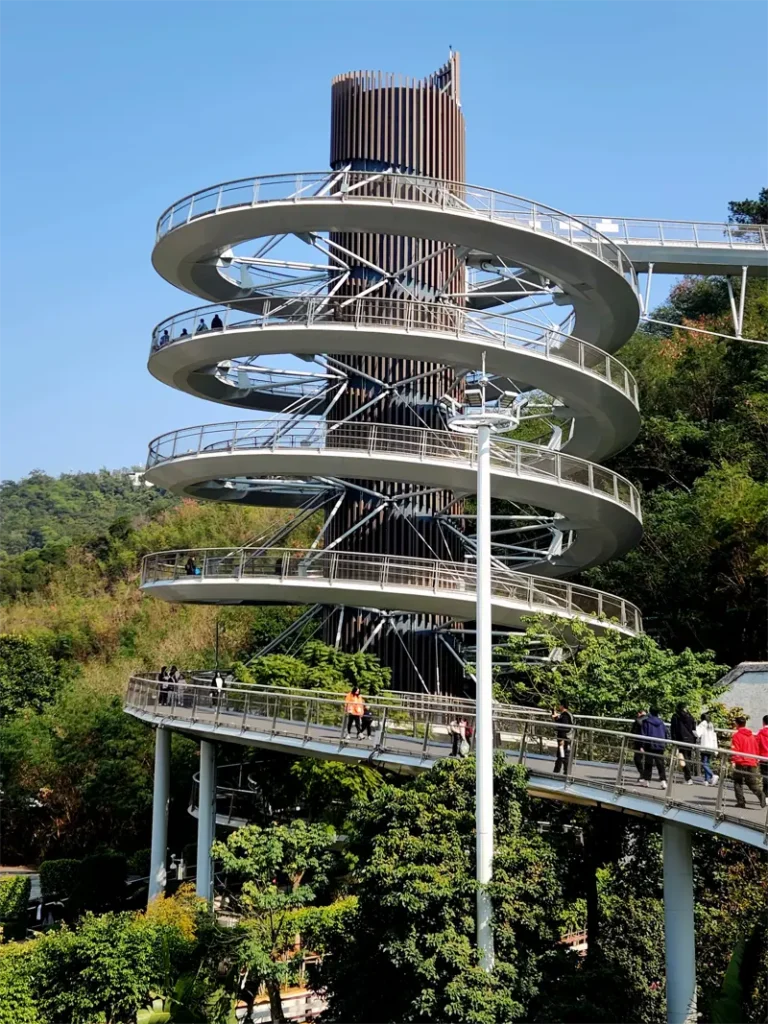
Want a bigger view? Dongping Mountain (东坪山) is an easy city hike, and from the top you can see the city and the sea, with the evening breeze taking care of the rest of your day.
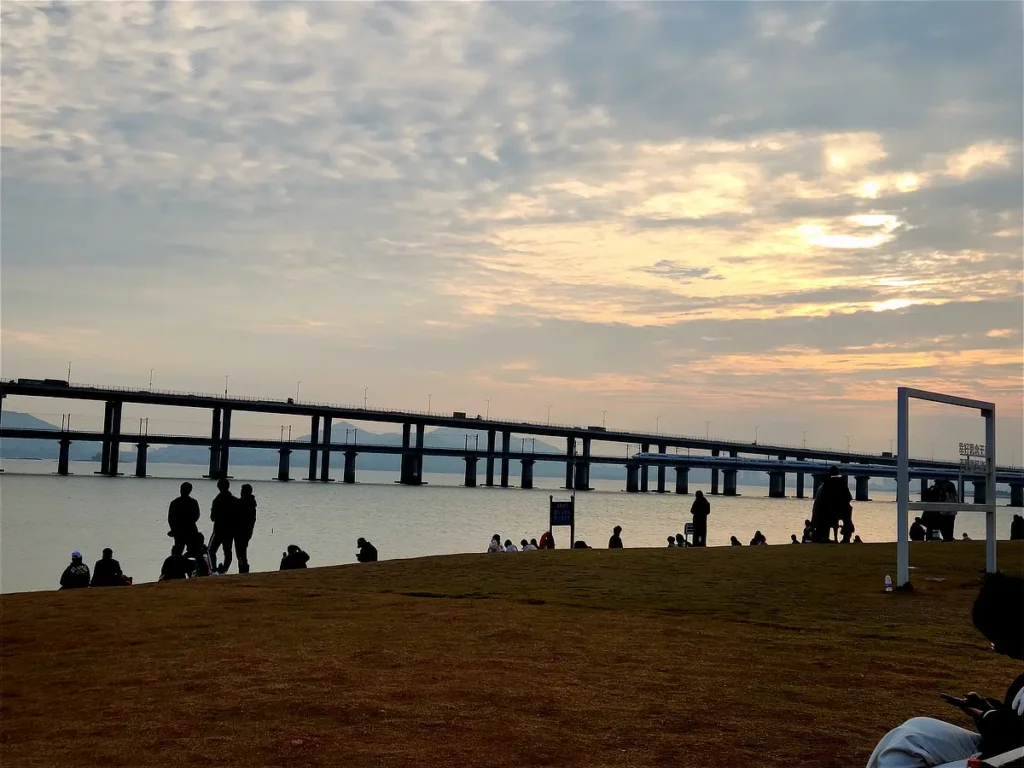
Xiamen is famous for its coastal scenery, meaning cycling through the Huandao Road with the sea beside you, or even catching the sunset on Jimei’s Ten-Mile Long Causeway (十里长提) while a metro train glides across the water is a must try experience.
The best part is how ordinary it all feels. Most of these spots are free, and nobody needs special gear. You just show up and enjoy.
Why Xiamen Stands Out in China
Plenty of Chinese cities have a skyline. Far fewer also have a beach, a UNESCO island, and an actual sea breeze. That mix is what makes Xiamen feel different from the moment you arrive.
Big China, Without the Big-City Overload
Xiamen has around 5 million people, compared with 20+ million in Beijing or Shanghai, and you feel the difference right away. There’s no endless sprawl, and getting from one sight to the next rarely ate up my day. Xiamen was even named one of China’s Top Ten Cities for a Better Life in 2019–2020, and after spending time there, I could see why. The air feels fresher, the pace is slower, and the sea breeze is always nearby. I never felt rushed to get to whatever I had planned next.
Hills, Harbor, and Mostly Mild Weather
The subtropical climate averages around 70°F (21°C) over the year, so there’s no Beijing-style deep freeze. Summers are another story: hot, humid, and typhoon-prone (more in the Best Time to Visit section below). Hills, a natural harbor, and coastline are all packed onto one compact island, which hleps explain the nickname “Garden on the Sea.”
Old and New, Side by Side
A centuries-old fishing village (Zengcuo’an), a university founded in 1921, and Gulangyu’s colonial-era mansions a short ferry ride away all sit near a skyline of glass towers. Few places stack this many eras so close together.

A Small City With an International Past
In 1903, Gulangyu became a formal international settlement, and consulates from 13 countries set up on the island, including Britain, France, and Japan. That chapter ended with Japan’s occupation in the early 1940s. More recently, Xiamen hosted the 2017 BRICS Summit and has been home to the Golden Rooster Awards, one of China’s biggest film honors, since 2019.
Is Xiamen Right for You?
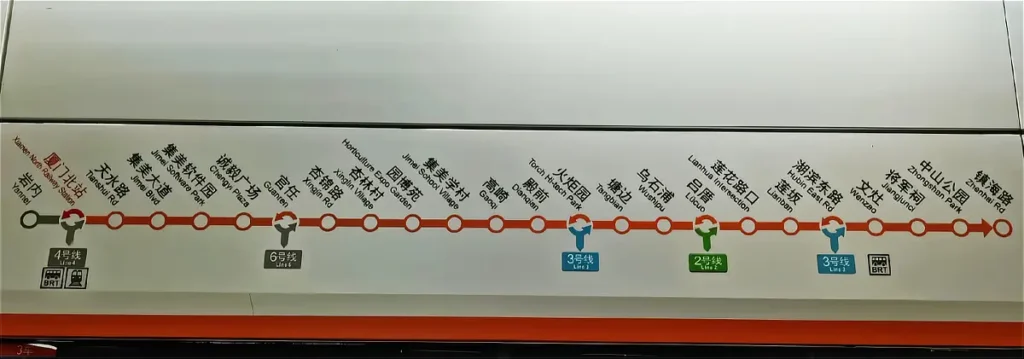
Here’s the honest answer. If you want imperial history on the scale of Beijing or Xi’an, Xiamen isn’t that. But if you want beaches, great food, and a slower pace, it’s hard to beat. The city is compact enough to hit the highlights in 3 or 4 days, and the metro signs include English, which makes it an easy first stop in China.
For me, Xiamen was the perfect warm-up. It let me ease into Chinese culture and figure out how everything works before tackling bigger cities like Shanghai, where the crowds are larger and you have to go with the flow.

Best Time to Visit Xiamen
The best time to visit Xiamen is October to December, or spring from March to May. You get mild temperatures, comfortable humidity, and the most reliable blue skies of the year.
Season by Season
| Season | Months | Average Highs | Average Lows | What to expect |
|---|---|---|---|---|
| Spring | Mar – May | 68 – 81°F (20 – 27°C) | 55 – 69°F (12 – 20°C) | Warms up fast. Rain increases by May. |
| Summer | Jun – Aug | 86 – 90°F (30 – 32°C) | 75 – 77°F (24 – 25°C) | Hot, humid, and rainy. Typhoon season. |
| Autumn | Sep – Nov | 75 – 87°F (24 – 30°C) | 62 – 75°F (17 – 24°C) | Sunny, dry, and comfortable by October. |
| Winter | Dec – Feb | 64 – 67°F (18 – 19°C) | 51 – 54°F (10 – 12°C) | Mild and dry, but can feel damp and chilly. |
I visited in February, and as a New Yorker I found it pretty mild: not too cold, definitely not hot. You’ll still want a sweater when you head out, especially near the ocean, where the wind makes it feel cooler.
I also stayed from April to June and watched the weather change. April was just starting to get hot, May was properly hot, and by June the heat came with a lot of rain.
Quick Tips
- Carry an umbrella. I used mine for rain and also on sunny days to block the sun, which takes the edge off the heat.
- Wear sunscreen daily. Even on cloudy days, it’s worth it.
Xiamen can get hit by typhoons several times a year, mostly between July and September. Check the forecast before booking anything you can’t change. September can still be stormy and hot, which is why October is the safer pick.
Watch Out for Crowds
Even the best weather is no fun in a crowd, so plan around these dates:
- Chinese New Year (late January to February): Many small businesses are closed, though plenty of places stay open. It’s busy, but a fun time to be in a Chinese city if you don’t mind crowds.
- Labor Day (early May) and July to August school holidays: Fujian families vacation in Xiamen too, so beaches and attractions get noticeably busier.
- Golden Week (October 1 to 7): China’s biggest domestic holiday, with packed attractions and higher hotel prices. Come in mid-October instead.
Holiday dates shift a little each year, so check the calendar before you book.
The Bottom Line
So, what is Xiamen famous for? Gulangyu’s colonial mansions and car-free lanes, oyster omelets and sha cha noodles, sunset beaches, and a coastline you can bike, hike, or just stare at. Xiamen doesn’t shout for attention, which is exactly why it surprised me.
Xiamen FAQ
Xiamen is best known for Gulangyu Island, a car-free, UNESCO-listed island of colonial mansions and pianos. It’s also famous for fresh seafood, oyster omelets, coastal scenery, and a relaxed, livable feel that sets it apart from China’s megacities.
Yes, especially if you like beaches, great food, and a slower pace. It’s compact and easygoing, which makes it a good first stop in China. If you want imperial history on the scale of Beijing or Xi’an, it’s not that.
Three to four days covers the highlights: Gulangyu, the Old Town, a beach, and street markets. Add a day if you want to fit in a tulou day trip. I spent two weeks there in February and later stayed from April to June, and I was still finding new spots.
It depends on your passport, and the rules change often. Travelers from many countries can enter China visa-free for up to 30 days, and the UK and Canada joined that list in February 2026. US passport holders still need a tourist (L) visa for a regular trip, unless they use the 240-hour (10-day) transit policy, which only works at designated ports and only if you’re continuing on to a third country. Confirm everything with the Chinese embassy or consulate before you book.
Some do, mainly in hotels and tourist areas. Mandarin is the main language, and locals also speak Minnan (Hokkien). The metro and major sights have English signs, and a translation app helps everywhere else.
Alipay and WeChat Pay are used almost everywhere, and both can work with many foreign cards, so set one up before you arrive. They cover the metro, buses, and ride-hailing apps like DiDi (滴滴) and Amap (高德地图). I rarely needed cash during my trip, but it’s still worth carrying a little as a backup. Keep some small bills handy, as smaller shops and street vendors may not always have change for larger bills.
Quick Note: Payments made with non-Chinese bank cards will incur a 3% surcharge on transactions over ¥200 (approximately $30) when using these apps.
Generally, yes. Xiamen is considered a safe city for visitors, with the usual precautions in crowded places.
Continue Exploring
Ready to plan your next adventure? Explore more destinations or discover another side of Xiamen.